Skip to content

Dr. Sven Mulfinger

Executive advisory for founders and CEOs

A thinking partner for the decisions you cannot delegate.

I work with founders and CEOs when decisions get harder, leadership dynamics become more complicated or the business demands a different kind of leadership.

Discuss a leadership challenge Confidential. Direct. No obligation to continue.
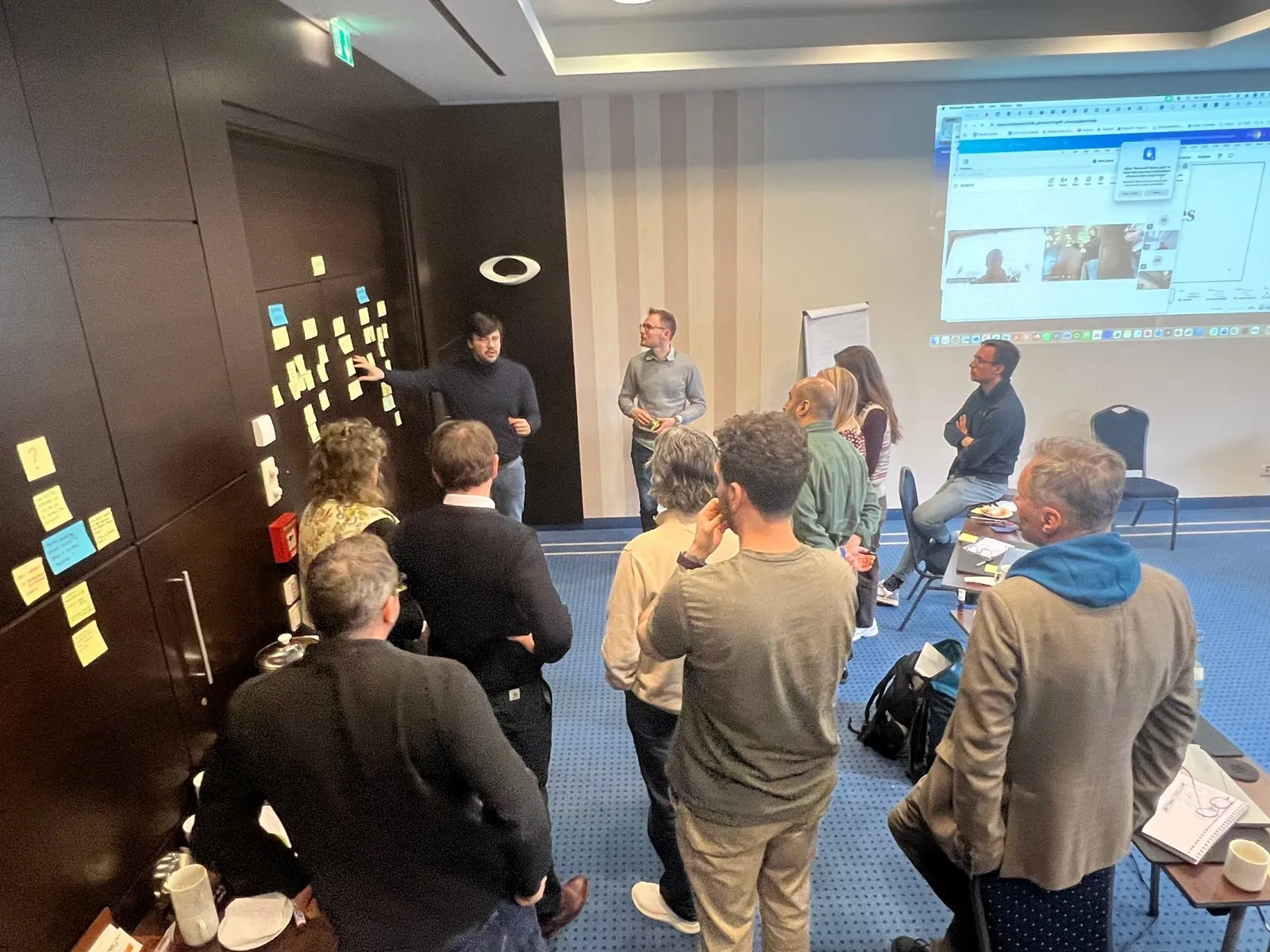
Dr. Sven Mulfinger and Vincent Azé facilitating an executive leadership team offsite in Berlin
Leadership team offsite in Berlin, run with Vincent Azé for Kuma Partners. The sticky notes are the work.

Where the work starts

When the usual answers stop working.

The decisions that keep coming back. Repeatedly discussed, never resolved. Everyone understands the problem. Yet the decision keeps getting postponed, diluted or reversed. By now the useful question is why the organisation cannot resolve it.

When the leadership team becomes the bottleneck. Capable people, structural gridlock. Responsibilities overlap, disagreements stay unresolved and too many decisions still return to the CEO. The work is to understand what is happening between the people as well as within them.

When the business outgrows the founder. The company scaled; leadership did not. How decisions are made and responsibilities are shared has not changed with it. The founder has to work out what to keep, what to let go of and what the next version of their role must look like.

How I think

Most problems arrive with a label already on them.

The useful work usually starts by questioning the label. Two patterns I see often:

“My team does not take enough ownership.”

The obvious response is to work on accountability: clearer roles, tighter follow-up, perhaps a different person in one of the seats.

The question I ask first is what the team has learned. If every important decision eventually comes back to the CEO's desk, escalating is the rational thing to do. What looks like a problem with the team is often a pattern the CEO keeps in place without meaning to.

The useful question then becomes what the CEO has to stop doing for real ownership to become possible.

“We need to hire a COO.”

The obvious response is to start a search.

Before that, I want to know which decisions the CEO actually wants to stop making, and which ones they will still quietly take back. A senior hire is often a container for decisions the founder has not yet decided to release.

If that stays unresolved, the new COO inherits the title without the authority and the company pays for a second bottleneck. Sometimes the answer is still a COO, and it is a far better hire once the decisions the role owns are clear.

Background

I have carried the responsibility too.

The operator. I spent four years building MaterFly, the venture in women's mental health that became Dana, and then founded Kuma Partners. I know what it is to carry the whole company, including the parts that never reach the pitch deck.

The scientist. I trained in molecular genetics and chemical engineering and hold a doctorate. Both taught me to look for the mechanism underneath the symptom. In genetics the visible trait is rarely where the cause sits, and in engineering a recurring failure usually points to the process rather than the part.

The advisor. I have guided more than 100 founders, managing directors and C-suite leaders across confidential 1:1 advisory, executive peer councils and board-level interventions throughout Europe, in English, Spanish, German and French. I grew up between languages and institutions in Brussels, which still shapes how I read a leadership team.

More about my background

Field notes

What changed.

Confidentiality prevents publishing names. It does not prevent showing how real executive dilemmas get resolved. Three engagements, anonymised.

Scale-up CEO · Series B

The founder bottleneck

The situation. Strategic execution was stalling. Every decision bounced back to the founder's desk, creating operational gridlock and executive burnout.

Underneath. The founder was delegating tasks while keeping unspoken veto rights on product nuance. The team protected itself by escalating decisions rather than owning the risk.

What changed. We codified explicit boundary conditions for autonomous team decisions and rebuilt the executive meeting cadence. The founder reclaimed 15 hours a week and execution pace doubled.

Industrial B2B · €80M ARR

Artificial alignment

The situation. The executive team agreed unanimously in Monday meetings, yet commercial and operations were executing conflicting priorities by Thursday.

Underneath. Commercial incentives directly contradicted production capacity. The conflict was structural, while the team kept treating it as a clash of personalities.

What changed. We surfaced the unaddressed economic trade-offs in a facilitated session and replaced cosmetic harmony with an explicit operating agreement on margin versus volume.

Founder and chairman · International

The lonely decision

The situation. Facing a complex multi-market transition, the founder had nobody inside the organisation who could challenge their logic without an agenda of their own.

Underneath. The leadership team was managing the founder's temperament instead of stress-testing the valuation models and governance trade-offs.

What changed. I acted as an independent, unvarnished sparring partner for six months, pressure-testing blind spots and structuring a transition that protected the company culture and shareholder value.
Research

Why do some leaders excel at seeing possibilities but struggle with the systems needed to scale them?

Many founders have spiky cognitive profiles: ADHD, giftedness, dyslexia, autism or a combination that never received a label. The same wiring that lets them see around corners shapes how they delegate, decide and handle conflict once the company grows.

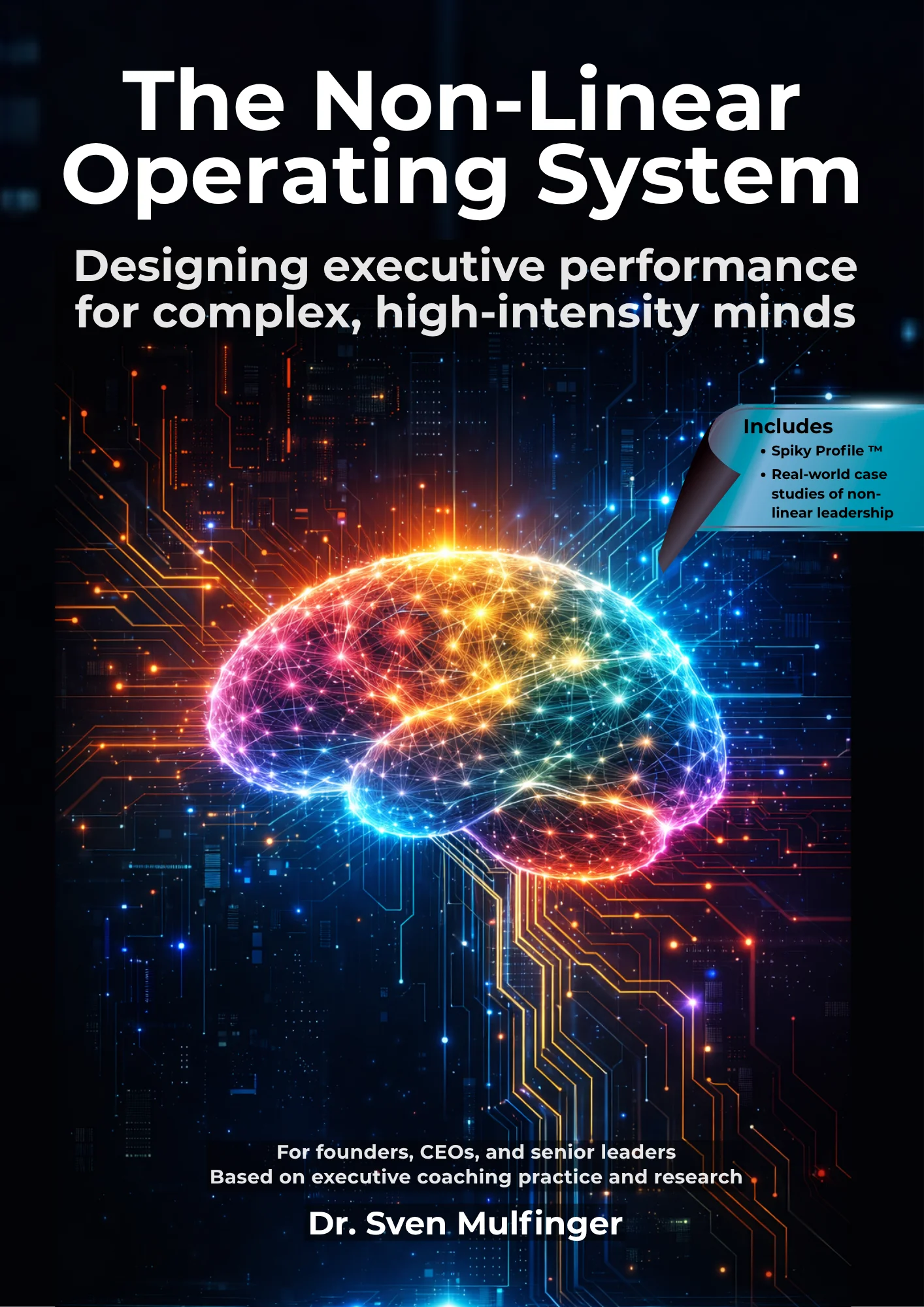
The Non-Linear Operating System is a forthcoming work developed in collaboration with Prof. Dr. Thomas Kluetter (IESE Business School) and Prof. Dr. Nicolas Deuschel (IE Business School), grounded in research and field analysis across more than 50 serial entrepreneurs and CEOs operating with a non-linear mind.

I do not ask every leader to see themselves this way. Understanding how a leader actually operates is simply more useful than asking them to fit a standard model of leadership.

Explore the research at neurodisruptors.com (opens in a new tab)

Ways to work together

Three ways to work together.

1:1 advisory is the core of my work. The other two exist for when the tension sits elsewhere: between peers, or inside the executive team.

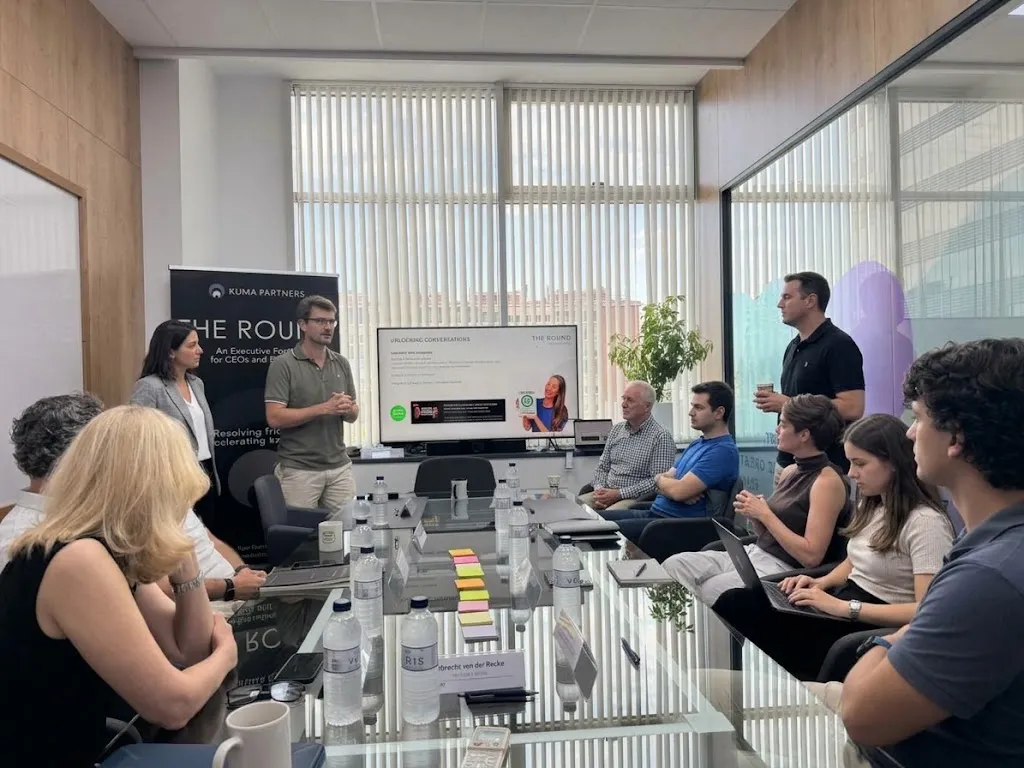
Dr. Sven Mulfinger facilitating The Round executive peer session in Barcelona.
The Round, a peer session in Barcelona.
  • 1:1 Executive Advisory

    Confidential counsel for the founder or CEO carrying the final call. Two sessions a month for six or twelve months, in Barcelona, Madrid or online, with direct access in between when a decision cannot wait.

    How 1:1 advisory works

  • The Round

    A private peer group in Barcelona for founders and CEOs of growing companies. Monthly sessions on live issues with people who carry the same weight. By application or nomination.

    theround.kuma.partners (opens in a new tab)

  • Leadership teams

    When the friction sits between executives, the work moves to Kuma Partners, my practice for leadership team offsites, operating models and the 14-Day Leadership Friction Diagnostic, run with partners who have led companies themselves.

    kuma.partners (opens in a new tab)Offsites (opens in a new tab)

A first conversation

Bring the problem you have not been able to solve.

Tell me what is happening, what you have tried and what is at stake. We will work out together whether working with me would make a difference.

Discuss a leadership challenge Confidential. Direct. No obligation to continue.